
Tillamook Air Museum Launches Fundraiser After Storm Tears Open Hangar B Roof

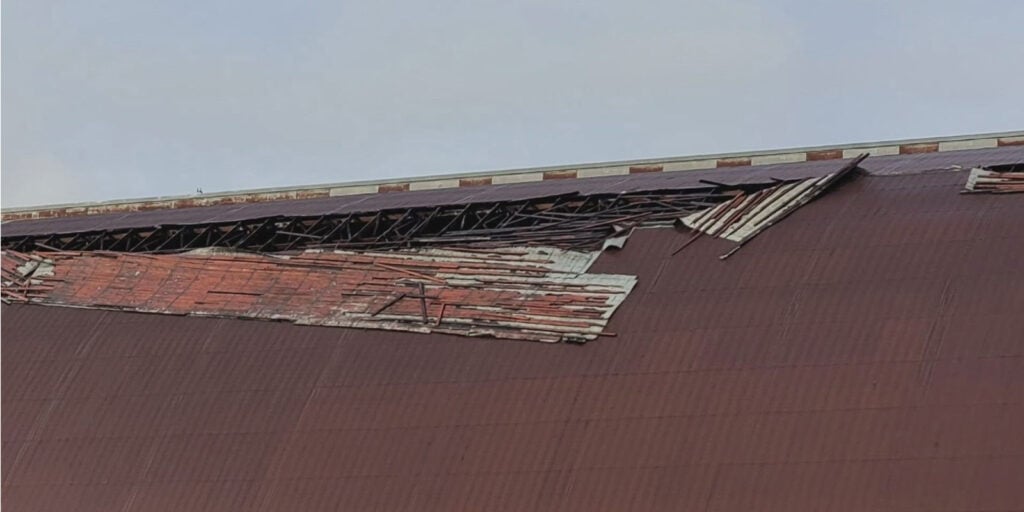
Fundraising is underway to help save one of America’s most iconic aviation landmarks after a powerful winter storm ripped open the roof of Hangar B at Oregon’s Tillamook Air Museum. The World War II-era building suffered extensive damage during a December 2025 windstorm and has remained closed to the public ever since.
For aviation enthusiasts—especially those interested in airships—the Tillamook Air Museum offers an experience unlike almost any other. The museum houses an impressive collection of military, civilian, and rotary-wing aircraft and a vast collection of aviation artifacts.
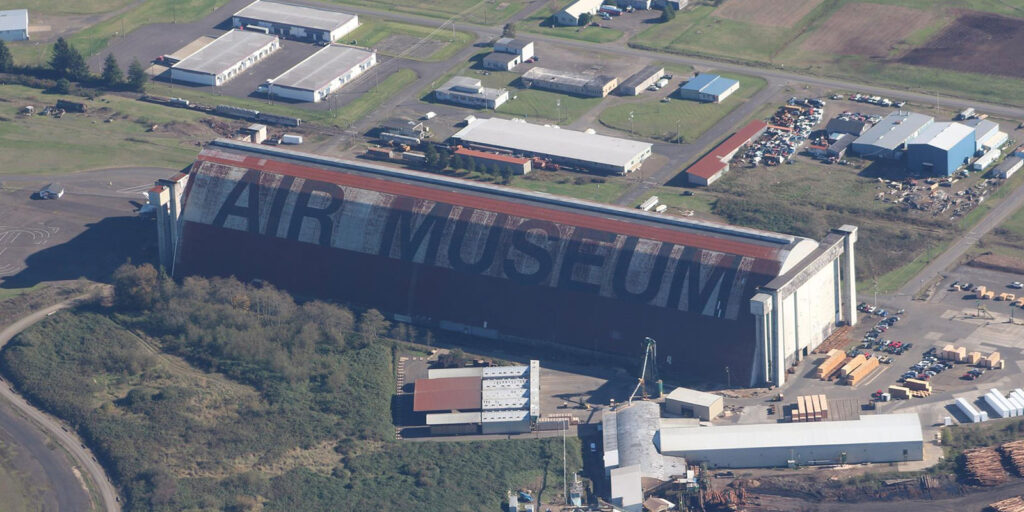
While the museum displays are fascinating, the real star of the show is the building itself. There are just five World War II-era airship hangars still standing in the United States, and Hangar B is the only one open to the public as an aviation museum.
Portland’s KPTV Fox 12 News has video below:
One of the World’s Largest Wooden Structures
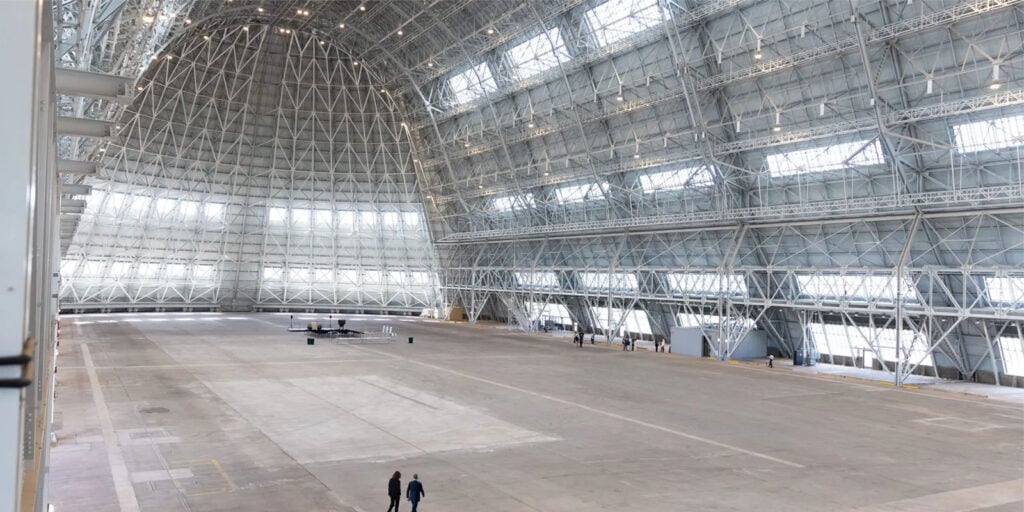
Originally identified as U.S. Naval Air Station Dirigible Hangar B, the sheer size of the structure is hard to imagine; the building houses more than seven acres, all under one roof. It is widely regarded as the world’s largest clear-span wooden structure. “The hangar itself is the crown jewel of the collection,” said museum curator Christian Gurling. “It’s what sets us apart and makes us different and unique from every other aviation museum.”
Some of the structure’s impressive statistics:
- Length: 1,072 feet (327 m) long
- Width: 296 feet (90 m) wide
- Height: 192 feet (59 m) tall
- Roof footprint: Roughly 12 acres if laid flat..
- Lumber used: Enough Douglas fir to construct nearly 300 three-bedroom homes.
Purpose Built for War-Era Blimps
Completed in 1942, Hangar B was built specifically for the Navy’s K-class blimps, which escorted merchant convoys, hunted enemy submarines, performed search-and-rescue missions, and carried out coastal reconnaissance during World War II.
Tillamook’s structure is among the last survivors, making it an important piece of airship history. It is listed on the National Register of Historic Places, and for lovers of modern airships, it’s a rare opportunity to stand inside a facility purpose-built for the enormous K-class blimps.
There was originally a companion building, Hangar A, which was destroyed by fire in 1992. The concrete support pillars from that structure still stand on the Port property, underscoring just how few of these enormous wartime airship hangars have survived.
The vast majority of museum pieces feature fixed-wing or rotary-wing aircraft, but the society also boasts historical displays and photographs about the hangar’s wartime role in supporting Navy blimps. Airship-related displays include Interpretive exhibits explaining the history of Naval Air Station Tillamook and the K-class blimps once based there. Airship memorabilia and artifacts related to the base and its personnel are also on display, offering a unique glimpse into the building’s storied past.
The Impact of 2025’s Devastating Storm
On December 16, 2025, a winter storm tore inland from the Pacific, and high winds peeled back a large section of roofing on the south end of the building. The Tillamook Air Museum Foundation reported the damaged section as roughly 160 to 180 ft (49 to 55 m) long, and up to 30 ft (9 m) in width at the widest point. “To see that hole and the damage that storm had done really impacted me,” Gurling said. “This is such a special place. We call it history housing history.”
With the roof left open to the elements, staff rushed to protect the museum’s collection as additional Pacific storms swept through the region. Among the aircraft housed in Hangar B is a rare F-14 Tomcat used in the 1986 film Top Gun, one of only three Tomcats from the movie’s production known to remain.
An Expensive Road Ahead
By mid-January, the Port of Tillamook Bay had received estimates ranging from $3.5 million to more than $5 million simply to stabilize and replace the damaged roof section. Previous engineering assessments suggest that fully restoring Hangar B could ultimately exceed $20 million, largely because repairs must comply with both historic preservation standards and modern building codes.
Facing such high repair costs, the Port of Tillamook Bay has not committed to fully funding the repairs, citing unsustainable long-term maintenance costs in addition to immediate repair needs. While FEMA assistance may be an option, the Port would still be responsible for a substantial portion of the bill, Port officials explained.
The Port continues to weigh its options, and public funding has begun in order to assist efforts. For more background on the collection and the building, readers can visit the Tillamook Air Museum site. To support repair efforts, visit the museum’s donation page.
Sources and Further Reading:



Responses