
Tillamook Port Faces Tough Decisions Regarding Historic Hangar B

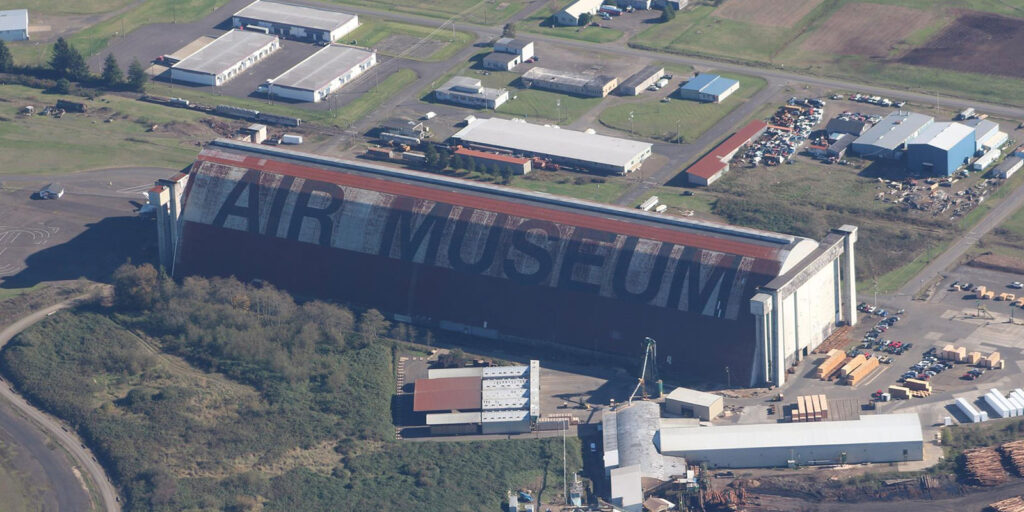
After months of debate over repairing the WWII-era hangar that houses the Tillamook Air Museum, the Port of Tillamook has voted against committing funds to the project—but officials say efforts to save the landmark are continuing.
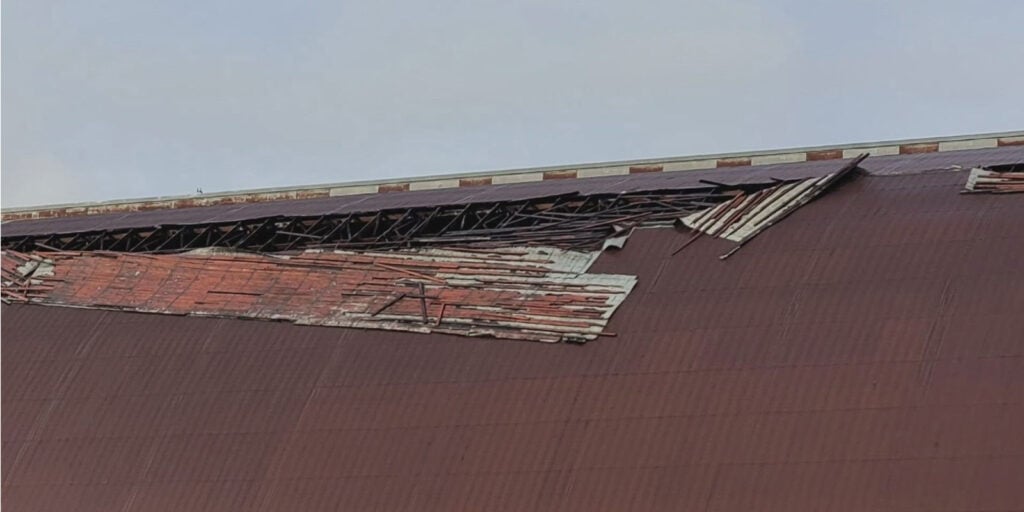
The future of one of the last remaining WWII-era airship hangars in the United States has been uncertain since a December 2025 storm damaged the roof. On May 21, 2026, the Port of Tillamook announced a 4–1 vote concluding it was not financially feasible to fund repairs, leaving the museum closed indefinitely.
Port Commissioner Bill Baertlein explained the board’s reasoning, saying the board’s obligation was to the port’s overall financial health, not individual sentiment. “The decision couldn’t be made with our hearts,” he stated. “Everyone loves Hangar B, and recognizes its historical significance, but even if the building were rebuilt, the long-term financial outlook remains unsustainable.
Making Tough Decisions: Weighing Historic Significance Against Finances
Board members also pointed to the risk of future storm damage and the upkeep burdens of maintaining an 80-plus-year-old wooden building as factors weighing against repair. According to Baertlein, annual maintenance alone costs roughly three times the revenue the building generates.
Museum and Port officials are not willing to abandon the hangar quite yet, though. According to museum officials, the Port is still looking for other ways to save the building, calling the hangar a monument to aviation that is too important to risk losing.
Why Saving the Hangar Matters
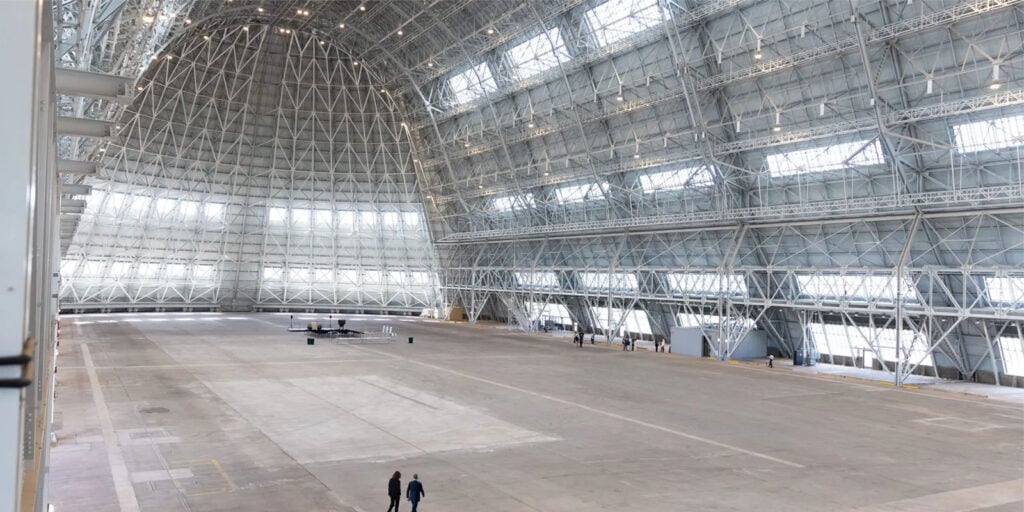
Hangar B is both a historic landmark and an engineering marvel. The enormous hangar is one of the largest clear-span wooden structures in the world, and its vast, column-free interior was designed to house an entire squadron of K-class blimps. The sister building, Hangar A, burned down in 1992, leaving Hangar B as the sole survivor of the pair and making it a fixture on the National Register of Historic Places.
An additional funding route is also being explored: the option of soliciting FEMA disaster assistance. Even if federal support through FEMA materializes, it is unclear how much additional financial support would be required, or where it might come from.
How the Hangar Reached This Point
The December 2025 storm tore open a large section of the hangar’s roof at a critical point: near the transition between its curved crown and vertical wall, on the building’s south end. Inspectors estimated the opening at roughly 200 by 30 feet (61 by 9 m).
The torn section didn’t fully separate; instead, it folded inward and remained hanging precariously, posing an immediate safety concern and prompting the museum’s closure. No injuries were reported, and museum officials indicated that the collection housed inside came through undamaged.
In the months following the storm, exhibits and aircraft were relocated within the building or moved into alternate storage as a precaution, and the steps toward initiating repairs began. The Port hired consultants, including Turner & Townsend, to assess the structure and estimate repair costs. Early projections put roof repairs alone at about $1.3 million, excluding the rest of the aging building’s needs.
Finding a Way Forward
The Port has expressed its thanks to the Friends of Tillamook Air Museum, the volunteer group that has advocated for the hangar throughout the process, for its help gathering information during the review.
The immediate priority is to remove the dangling roof section while continuing to seek assistance for asbestos abatement and long-term stabilization. Officials said broader repairs would likely take years and cost far more than fixing the roof alone.
Holding Out Hope For Hangar B
That’s not the end of the story, though. In a social media update posted on June 19th, the Tillamook Air Museum reported that Port Board President Jack Mulder had emphasized the Port has not walked away from Hangar B—or its future.
While the board’s vote ruled out committing additional Port funds or taking on debt for the project, museum management has hinted that conversations with potential outside partners are continuing behind the scenes.
Finding solutions won’t be easy, as the math involved remains daunting. Even with FEMA assistance, the financial challenge remains steep. Depending on the final award, the grant could still require roughly a 25% local match, while asbestos removal would add further costs.
Repairing only the damaged roof section would likely be the least expensive option. By comparison, demolition has been estimated at roughly $45 million, while fully restoring the structure could approach $300 million over several years. Meanwhile, leaving the opening exposed increases the risk of further storm damage and potential harm to the museum’s collection.
The museum’s board says it intends to keep lobbying on the hangar’s behalf even with the building closed to the public, framing the Port’s continued outside conversations as reason for cautious optimism rather than a foregone conclusion.
Those wishing to support preservation efforts can donate through the Tillamook Air Museum’s website.
Sources and Further Reading:
- Tillamook Port Board Votes Against Hangar B Roof Repairs (AVweb)
- Port of Tillamook Bay Votes Against Repairing Historic Tillamook Air Museum WWII Hangar (Vintage Aviation News)
- Port of Tillamook votes against repairing storm-damaged roof at iconic WWII hangar (KATU)
- Tillamook Port Board rejects repairs to storm-damaged hanger (Rogue Valley Times)
- Tillamook’s Historic Hangar B Will Not Be Repaired (FLYING Magazine)
- Historic Oregon Coast blimp hangar ripped apart by storm will not be repaired (OregonLive)
- Tillamook Airship Hangar Repair Still Possible (AvBrief)



Responses