
The Airlander 10 Seeks a Hydrogen Future: HAV and ZeroAvia Sign Zero-Emission Deal

UPDATE (April 3, 2026): In the months since the MOU was signed, ZeroAvia has continued advancing the ZA600 through regulatory milestones. The UK Civil Aviation Authority granted ZeroAvia Design Organisation Approval in November 2025, making it the first hydrogen-electric powertrain developer globally to achieve that status. In March 2026, the U.S. Federal Aviation Administration published final special conditions for ZeroAvia’s ZA601 electric engine, the electric motor and high-voltage system component of the ZA600 powertrain, advancing the system through the FAA’s type certification process.
Original article below:
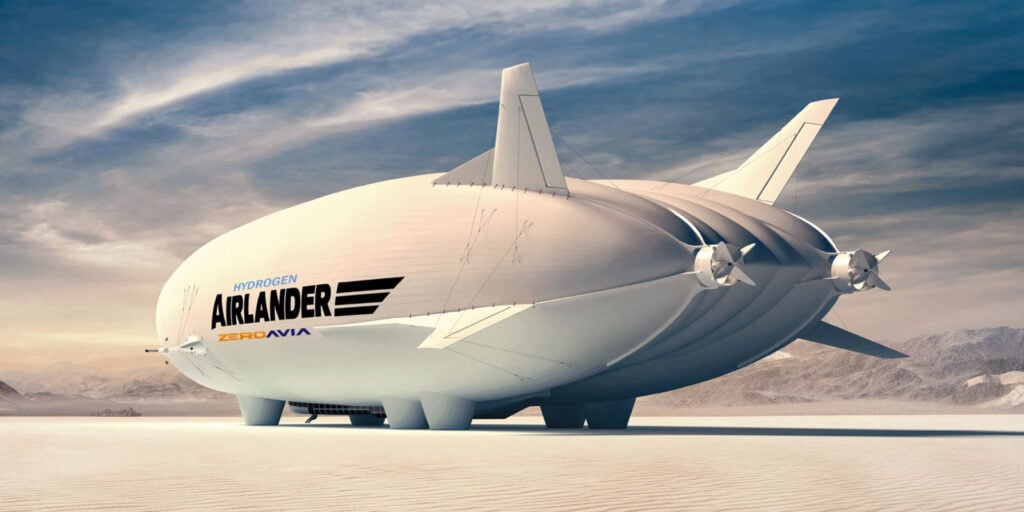
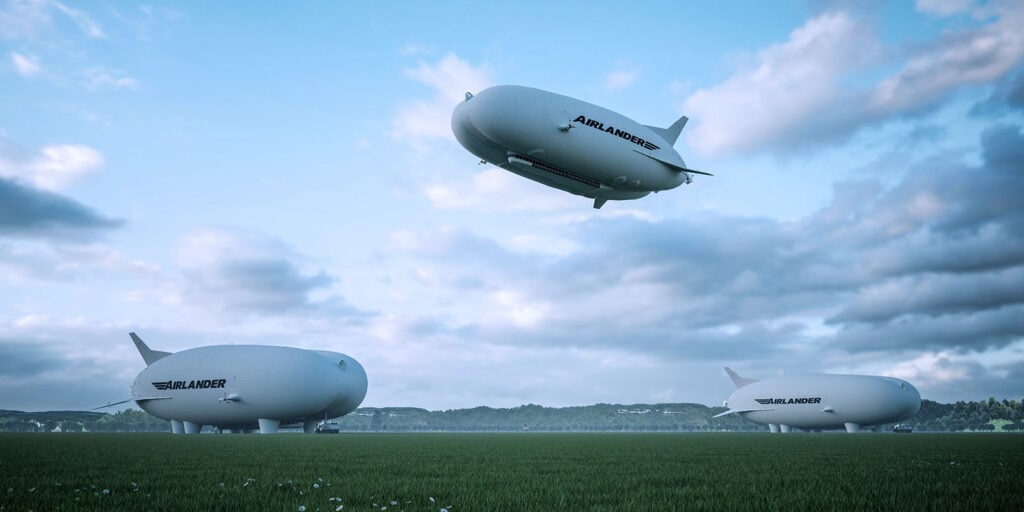
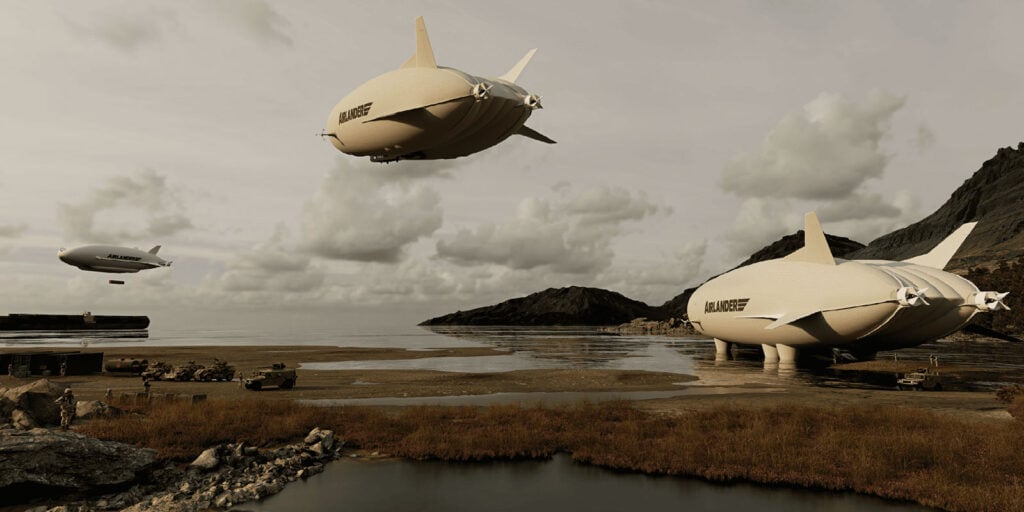
Hybrid Air Vehicles’ 302 ft (92 m) Airlander 10 has always been pitched as the cleaner alternative to conventional aircraft, but “cleaner” and “zero-emission” are not the same thing. A new partnership with hydrogen-electric propulsion company ZeroAvia is meant to close that gap.
Four ZA600 powertrains, one very large airframe
On November 10, 2025, HAV and ZeroAvia signed a Memorandum of Understanding (MOU) to jointly develop a hydrogen-electric variant of the Airlander 10. Under the agreement, the two companies will study fitting the aircraft with four of ZeroAvia’s ZA600 hydrogen-electric powertrains in place of the four diesel engines originally planned for the launch configuration. The stated goal is zero-emission operation in flight while still carrying 100-plus passengers, alongside reduced operational costs.
The ZA600 is ZeroAvia’s first-generation 600 kW hydrogen-electric system, originally aimed at fixed-wing aircraft. It pairs gaseous-hydrogen storage with a low-temperature proton exchange membrane (PEM) fuel cell, which combines hydrogen and oxygen to produce electricity, water, and heat. That electricity then drives an electric motor turning a propeller. There would be no combustion and no CO₂ from the aircraft itself. ZeroAvia says the ZA600 has secured hundreds of pre-orders from fixed-wing operators and lessors, and the company has flight-tested a prototype on a 19-seat aircraft. The architecture continues to move through regulatory milestones.
If the MOU progresses, the Airlander would be the first non-fixed-wing platform to fly with the ZA600. HAV CEO Tom Grundy framed it as a continuation of the company’s stated direction rather than a pivot, saying “Our intention has always been to offer our customers a fully zero-emission variant of the Airlander.” ZeroAvia founder Val Miftakhov, for his part, sees the airship as a useful new shop window for his hardware, calling it “another exciting airframe for line-fit” that could “open up a whole new market in air travel.”
Why the Airlander’s airframe is a boost to a hydrogen-electric powertrain
There is a real engineering case for choosing the Airlander as a hydrogen-electric platform. Hydrogen is energetic per unit of mass but bulky per unit of volume, even when compressed or liquefied, which means hydrogen-powered aircraft tend to run out of usable volume long before they run out of weight capacity. On a regional jet, finding room for the tanks is a real design problem.
The Airlander turns that constraint on its head. The Airlander 10’s payload compartment alone measures 66 ft x 10.5 ft x 6.6 ft (20 m x 3.2 m x 2 m) in the cargo/passenger variant, with additional space available across the gondola and along the underside of the hull for external storage. Hydrogen tanks can be positioned where they make engineering sense rather than competing with seats or freight for the same volume of space. The Airlander, being a hybrid aircraft, also generates roughly 60% of its lift from helium and the remainder from aerodynamic lift surfaces and vectored propulsion. For this reason the added mass of hydrogen-electric powertrains and tanks is less punishing to the overall lift budget than it would be for a conventional aircraft of comparable size. Both companies highlighted these advantages in announcing the MOU, and it is one of the more credible technical arguments for a hydrogen-electric powertrain on this airframe specifically.
The path forward from MOU to flight
The MOU is a development partnership agreement, not a build contract. The two companies will assess integration of the ZA600s, study the hydrogen fuel infrastructure that planned Airlander operations would require, and look at whether ZeroAvia’s technology could scale to the larger Airlander variants that HAV plans to develop later.
Several things still have to go well. ZeroAvia has to advance the ZA600 from its current pre-certification status to a full type certificate, a process the company has publicly targeted for late 2026 or 2027. HAV has to carry the Airlander 10 through its own type-certification process with the UK Civil Aviation Authority. And the hydrogen fuel infrastructure required to support Airlander operations, whether at the airports HAV’s customers plan to use or along their planned routes, will need to come together as well.
Sources and Further Reading:
- Mirror — Inside UK’s £60million mega-airship
- AIN — ZeroAvia and Hybrid Air Vehicles Study Hydrogen-Electric Airship
- Autoevolution — The Massive 100-Passenger Airlander Goes Hydrogen-Electric
- ZeroAvia announcement — ZeroAvia and Hybrid Air Vehicles Sign Agreement to Collaborate on Zero-Emission Airlander
- Hybrid Air Vehicles — News overview
- Flying Magazine — ZeroAvia Hydrogen-Electric Powertrain Could Propel HAV’s Giant Airlander
- CompositesWorld — ZeroAvia, Hybrid Air Vehicles to collaborate on hydrogen-electric Airlander

Responses