
India Seeks Domestic Manufacturers to build a Heavy-Lift Surveillance Airship for Defense

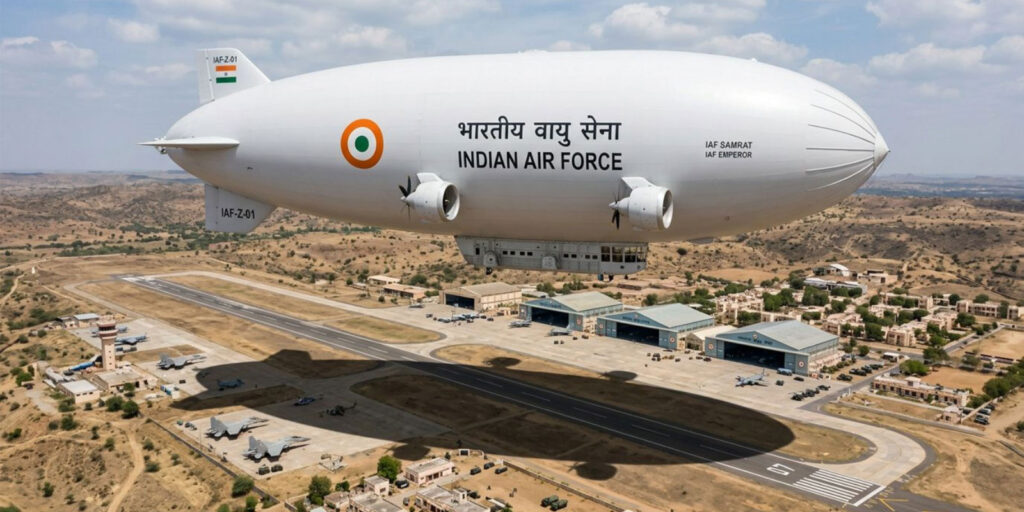
An Expression of Interest proposal (EOI) issued by the Indian Air Force (IAF) is generating excitement among companies hoping to enter the airship sector—but the project comes with some lofty goals.
The Indian Air Force is inviting domestic defense contractors to design and build a heavy-lift airship, and, if successful, the program could provide a major boost to India’s emerging lighter-than-air industry. Rather than purchase an existing concept, the IAF is asking the Indian Aerospace industry to develop an entirely new military airship as part of the country’s indigenous defense manufacturing initiative.
What the IAF Is Looking For
The requirements outlined in the IAF brief leave little doubt about the airship’s intended role: long-endurance aerial operation with the intended goal of achieving persistent ISR (intelligence, surveillance, and reconnaissance). Such platforms could help strengthen monitoring along India’s lengthy and geographically challenging borders with China and Pakistan.
Traditional manned surveillance aircraft—including AEW&C and AWACS platforms—are expensive to operate, limited in number, constrained by fuel requirements, and dependent on crew endurance. Satellites provide broad-area coverage but are restricted by revisit times and the high cost of deploying and replacing space-based assets.
The proposal calls for the industry to design and build an unmanned Medium-Altitude Heavy-Lift Airship (MAHLA). According to the specifications, the lighter-than-air platform would operate at altitudes up to 30,000 feet while carrying a full payload and remaining airborne for a minimum of 10 days. The preferred objective for the project lists an ambitious 30 day flight duration. Those performance targets put the project’s persistent surveillance mission at center stage.
If achieved, these flight durations would place the airship in a highly specialized category of airship endurance, offering loiter times well beyond those of conventional manned aircraft and even most unmanned aerial systems.
The proposal also leaves room for future expansion. If the airship eventually serves as a lighter-than-air launch platform for drones or loitering munitions, its operational value could extend well beyond surveillance. However, the IAF identifies these as potential future capabilities rather than initial program requirements.
Limiting the Field of Candidates
Although the program is likely to generate widespread interest, relatively few companies are anticipated to meet the eligibility requirements. Consistent with India’s push for defense self-reliance, the program emphasizes indigenous technologies and domestic manufacturing.
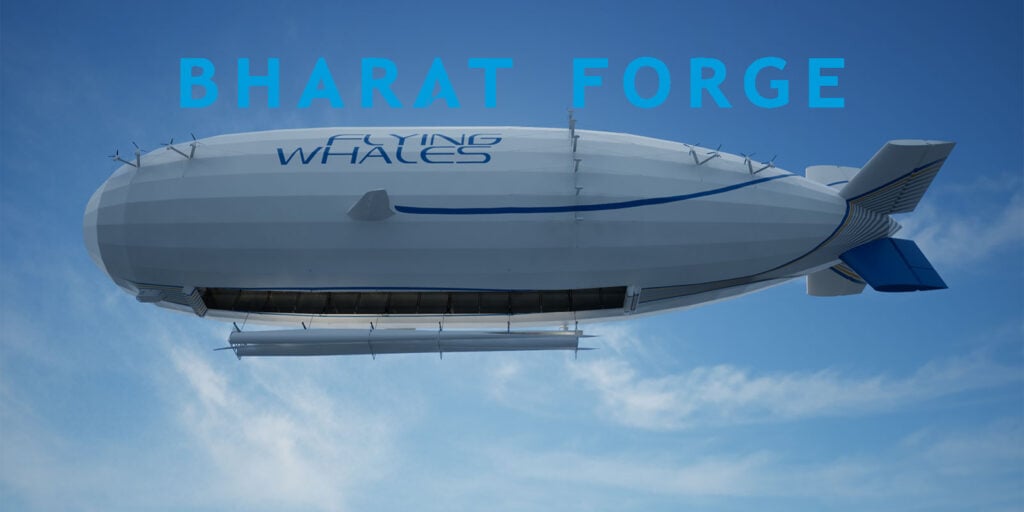
Recent announcements by the France-based Flying Whales airship company point toward a nascent airship industry in India, particularly through proposed manufacturing partnerships. Even so, the country’s lighter-than-air sector remains in its earliest stages, leaving a relatively small pool of companies with direct airship design and manufacturing experience.
Eligibility is limited to Indian companies as defined under the Defence Acquisition Procedure (DAP) 2020. Meeting the criteria means that vendors must demonstrate financial capacity (annual turnover for the last three financial years, net worth, and credit rating), in-house design and testing capability, manufacturing infrastructure, and a credible plan for indigenous outsourcing.
Beyond the mandatory eligibility requirements, the IAF has indicated a preference for contractors with aviation MRO (maintenance, repair, and overhaul) experience and familiarity with DGAQA (Directorate General of Aeronautical Quality Assurance) and CEMILAC (Centre for Military Airworthiness and Certification) processes.
The successful contractor will be expected to carry the project from the concept design stage through detailed development, prototype construction, and flight testing.
Lofty Goals Set for Airship Design Specifications
The procurement order for the IAF expression of interest is for approximately ten unmanned airships, pending feasibility studies. That order size could be considered a manageable amount to produce, but the listed specifications are ambitious by any current lighter-than-air standards.
In order for a proposal to be considered for the introductory phase of this project, domestic defense manufacturers must strive to meet the following criteria:
- Operational altitude: 0–10,000 ft (3,048 m) required; 30,000 ft (9,144 m) desired.
- Payload: 4,400 lb (2,000 kg) minimum; 11,000 lb (5,000 kg) preferred.
- Maximum airspeed: 100 knots (115 mph / 185 km/h) minimum.
- Endurance: 10 days with full payload required; 30 days preferred.
- Mission role: Persistent ISR (intelligence, surveillance, and reconnaissance).
- Operations: Autonomous launch/recovery from prepared or unprepared sites.
- Communications: Line-of-sight to 155 mi (250 km) minimum or satellite connectivity.
- Navigation: Operable in GNSS-denied environments; compatible with GNSS and IRNSS/NavIC.
- Mission systems: Radar, EO/IR cameras, SAR, and SIGINT sensors.
The Added Specification for the Use of Hydrogen
Given the nature of airships, any discussion of hydrogen can tend to get confused. Some unmanned airships, like Finland’s small autonomous Kelluu airships, do in fact use hydrogen for both lift and power, but the heavy-lift scale combined with military operation and stated desire to eventually carry drones and munitions makes the IAF program’s potential use of hydrogen for lift seem ill-advised. The use of hydrogen for lift is at best unconfirmed despite one source indicating it as such. However, the preference for hydrogen can be confirmed for the purpose of powering the propulsion systems.
Using hydrogen for propulsion presents its own engineering challenges. Storing sufficient hydrogen fuel requires bulky, well-insulated storage, presuming the gas cells of the airship are not used to contain the gas. Hydrogen’s flammability also demands additional precautions to ensure safe and efficient operation. In addition, designers must route the fuel safely from where it’s being stored to the power and propulsion systems without compromising the lifting gas envelope or other systems.
The power and propulsion architecture outlined in the EOI points toward a system combining hydrogen with solar power and batteries, and this suggests fuel cells are the intended primary means of converting hydrogen into electricity. The result will likely be a hybrid-electric airship, with the fuel cells generating electricity through an electrochemical reaction between hydrogen and oxygen to power the electric motors.
Making the Project Feasible
Designing, developing, and flight-testing an entirely new aircraft is an expensive undertaking, but the IAF is offering a potential way to make the project more affordable to contractors. The project falls under the Make-I category of India’s Defence Acquisition Procedure 2020, allowing the government to fund up to 70 percent of prototype development costs. That level of support substantially reduces the financial risk for participating companies.
The promise of government financial backing comes with caveats, however. If the procurement stage is reached, acquisitions will be through the Buy Indian-IDDM (indigenously designed, developed, and manufactured) route, stipulating a minimum of 50 percent indigenous content.
The April 30 deadline kicks off what is likely to be a multi-stage process: shortlisting respondents, building feasibility studies, providing detailed designs, and then prototyping—with the final goal of flight trials.
A platform of this scale and complexity will not see full-scale airborne trials anytime soon, especially since it is being developed largely from scratch within the Indian industrial base. The request sends a clear message, though: the IAF intends to pursue lighter-than-air capability, with hydrogen being the propulsion architecture of choice.
Sources and Further Reading:
- Tech upgrade: IAF seeks partners for hydrogen-powered airship – The Tribune
- IAF plans to deploy heavy-lift airship at 30,000 ft for border surveillance – Times of India
- Indian Air Force invites partners for heavy lift surveillance airships – NewsBytes
- Indian Air Force seeks industry partners to develop hydrogen-powered heavy-lift airship – India Sentinels
- IAF looks to build hydrogen airship to boost surveillance – Fuel Cells Works
- IAF Seeks Partners for Hydrogen-Powered Airship to Boost Long-Endurance Surveillance – Hydrogen Fuel News




Responses