
India to Host Flying Whales’ Third Cargo Airship Hub Under New BLP Group Partnership

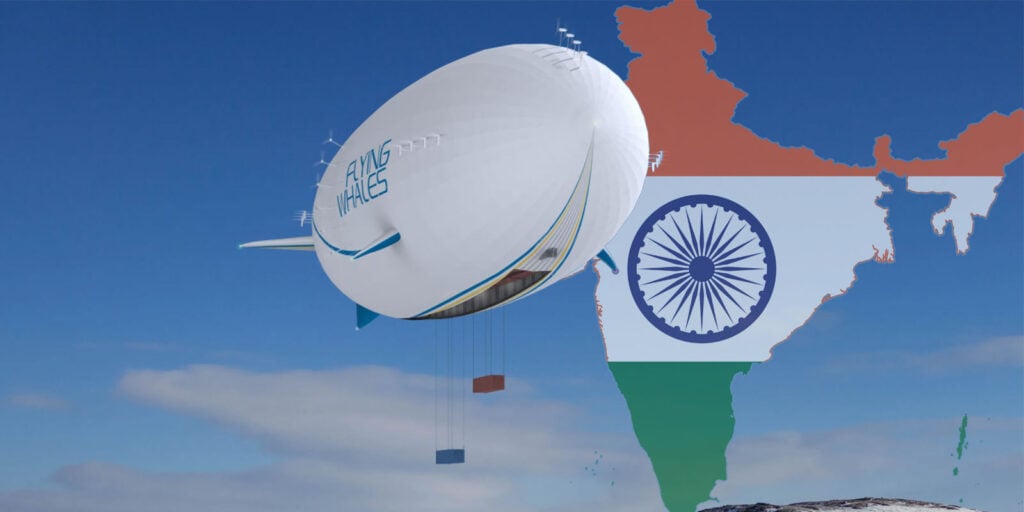
France-based Flying Whales and India’s BLP technology company have announced a strategic partnership—with a goal to establish an airship manufacturing ecosystem in India.
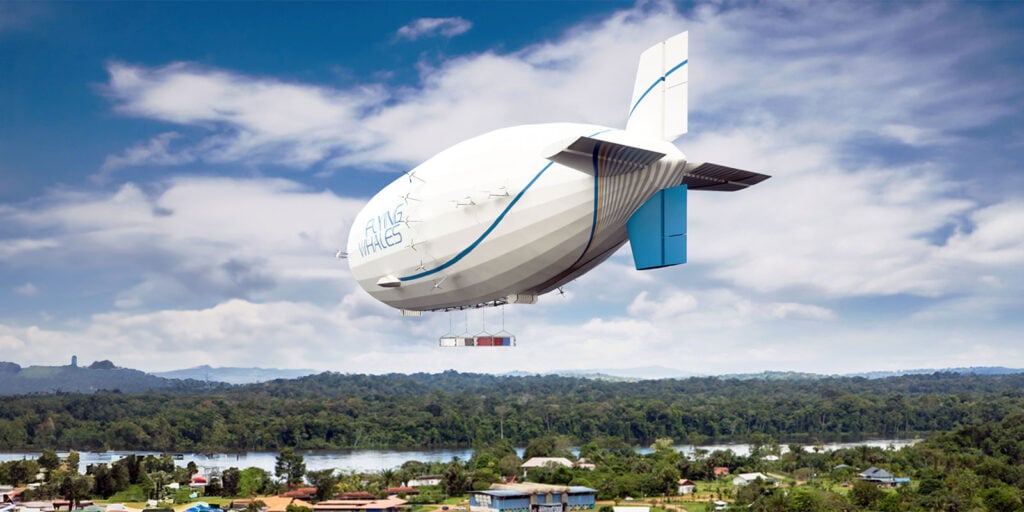
The Flying Whales airship project is taking another step toward the construction phase of its LCA60T heavy-lift airship, according to an April announcement. The companies timed the news release with the summit between France’s President Emmanuel Macron and Indian Prime Minister Narendra Modi, promoting the joint agreement as a win for industrial cooperation between France and India.
India is one of Flying Whales’ largest prospective markets outside Europe, with existing pre-commercial agreements tied to infrastructure development, renewable energy, and remote logistics. Company president Sebastien Bougon categorizes the rigid airship as a “sustainable transport solution that will connect the unreachable, empower the underserved, and decarbonize heavy lift logistics.”
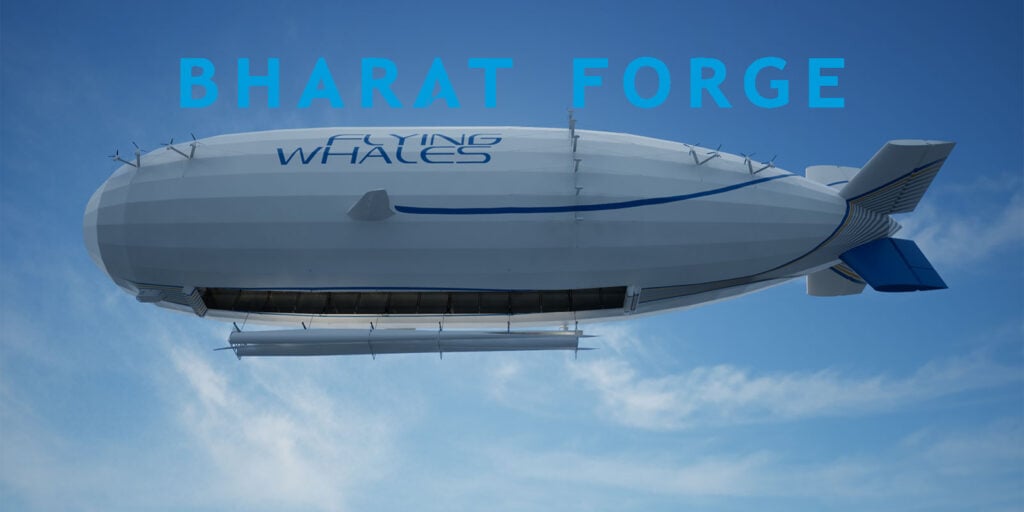
New Delhi’s Bharat Light & Power Group (BLP) is a renewable energy and technology company with demonstrated strong ties to the aviation industry, and the proposed project will see the development of a Final Assembly Line (FAL) to construct the innovative airship design.
The planned regional hub is not anticipated to be a full, top-to-bottom factory. Instead, the partners describe the Indian project as developing a broader manufacturing ecosystem centered on the Final Assembly Line, and establishing regional assembly could reduce transportation costs, strengthen local supply chains, and satisfy future domestic manufacturing requirements should production move forward.
Building An Airship Designed For Heavy Lift Cargo Transport
In aerospace parlance, the Final Assembly Line is described as the facility where major sub-assemblies such as structural components, propulsion, gas cells, and onboard systems are brought together for the production of a finished aircraft.
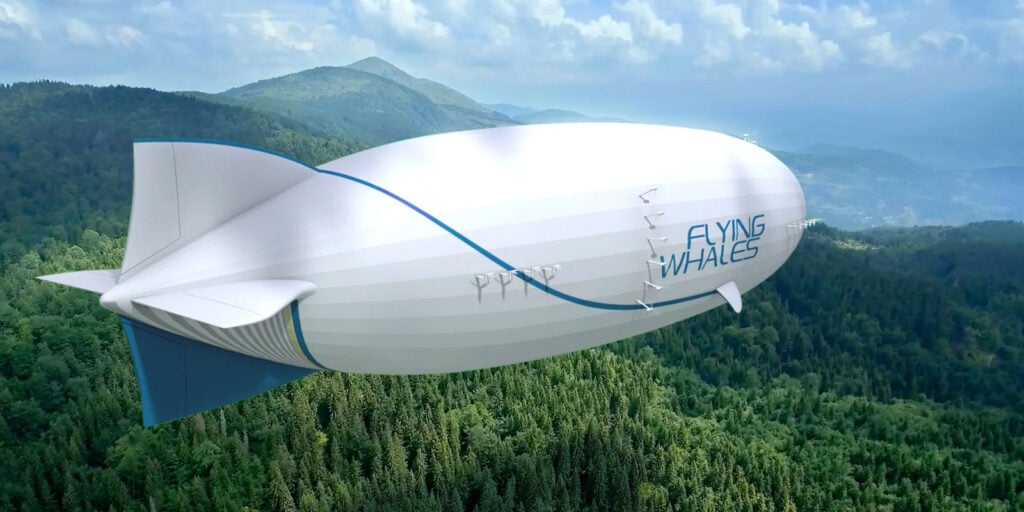
The LCA60T is designed to load and unload cargo while hovering, eliminating the need for a runway or prepared landing zone. That potential capability is what makes the platform useful for renewable energy logistics; Flying Whales literature explicitly highlights wind turbine blades and high-voltage transmission towers as two example use cases. Construction, defense logistics, and humanitarian operations in challenging terrain are also touted as being ideal fields for the lighter-than-air platform.
Part of the rationale for an Indian assembly line is tied to the potential for the LCA60T to operate in difficult-to-access areas, given the country’s extensive Himalayan, isolated plateaus, and island terrain. The proposed hub in Tamil Nadu is anticipated to serve as a key base for deploying airships, with an eye to India’s growing infrastructure needs in remote locations.
Why the Location in Tamil Nadu Matters
The project’s partners have settled on Tamil Nadu as a project hub for good reason; the state has already been building a profile as an aerospace and defense manufacturing destination, offering a local talent pool of skilled labor. According to the joint statement, the investment is expected to generate over 300 highly-skilled aeronautics jobs, while also catalyzing the emergence of a new domestic aerospace supply chain in advanced composites, aerostructures, and lighter-than-air systems.
BLP Group CEO Tejpreet S Chopra said the platform “will unlock new possibilities for infrastructure, clean energy, defence, and humanitarian access across the Middle East and Asia-Pacific.”
The Big Picture – Creating the Third Pillar of a Global Network
The agreement between BLP and Flying Whales brings together an expanding global manufacturing network, something Bougon calls a “third industrial pillar,” linking India to confirmed locations in France and Canada. Flying Whales has also identified Australia as a potential future Asia-Pacific assembly location in previous corporate presentations, although no comparable manufacturing partnership has been publicly announced.
Flying Whales has been hinting at a connection to India for some time. In February, a partnership with the Indian logistics group Transport Corporation of India (TCI) was announced, opening the potential for airship services to be incorporated into TCI’s multimodal network. For India, the BLP partnership and the TCI deal form a notable link: BLP provides the manufacturing-and-services ecosystem, and TCI ties together a domestic logistics capability.
Supply and Construction Locations that Target Established Agreements
Flying Whales says it has signed approximately 90 pre-commercial agreements worldwide, and while they are clear expressions of commercial interest rather than firm aircraft orders, many of these expressions of interest lie within the region that the Indian hub is intended to serve.
More than 25 agreements lie within the Middle East, Asia-Pacific, and India, and the current pre-construction agreements in those areas span civil and defense logistics, renewable energy projects, remote-area freight and construction, mobile hospitals, and humanitarian relief.
While Flying Whales has yet to flight test the LCA60T, the project successfully completed its Critical Design Review (CDR) in 2024, allowing the program to move into integration and validation. Flying Whales is currently targeting prototype assembly in early 2027, first flight in late 2027, and commercial entry into service around 2029, although those milestones remain subject to certification and development progress.
In addition to lining up with several pre-construction agreements, placing a central hub in India also aligns closely with many of the operational missions Flying Whales envisions for the aircraft.
The areas where Flying Whales envisions the airship playing a role include:
- High-voltage transmission line construction
- Wind-turbine component delivery
- Trans-Himalayan infrastructure projects
- Disaster-response missions
What to Watch For Next
Key milestones to watch include selection of a manufacturing site, publication of a construction schedule, and progress toward Indian certification for the LCA60T. Those developments will determine how quickly the Tamil Nadu initiative advances from a strategic agreement to an operational manufacturing hub. For now, the Tamil Nadu hub remains a first-phase commitment, with the substantive build-out still ahead.
Sources and Further Reading:
- Onmanorama: Flying Whales, BLP Group to set up cargo airship assembly line in India
- Financial Express: Flying Whales, BLP Group to set up cargo airship manufacturing hub in India
- Moneycontrol: India to build giant cargo airships: Flying Whales & BLP Group launch landmark aerospace hub in Tamil Nadu
- Flying Whales LCA60T product page
- Flying Whales FAQ (program timeline and technical specs)
- TCI–Flying Whales partnership coverage (Indian Transport & Logistics News)
- PMO India: Macron visit to Mumbai, 17 February 2026

Responses